
HUGMEDAPP
01
Our introduction.
Improving Medication Adherence for Older Adults
Smart Medication Reminder System for Older Adults Living at Home and Taking Multiple Medications
Role:
UI/UX Designer
Duration:
3 months
Team:
PM, Software Engineer, Hardware Engineer, and I
Platform:
IoT Smart Stcker + Mobile & Web Portal

02
Overview
Medication adherence is a critical issue among older adults. Many forget doses, mix up pills, or find existing reminder apps difficult to use. These challenges not only affect their health but also create communication gaps between patients, caregivers, and clinicians.
To address this, our team designed an IoT-based smart sticker and its companion mobile and web portal to help older adults manage medications more easily and give caregivers real-time insights into adherence.
03
Problem Space
9/10 of older adults take multiple prescription medications daily, yet adherence rates remain only 84.8%.
Current solutions on the market addressing medication adherence fall short because:
They require users to transfer pills into new containers, increasing confusion.
Apps are too complex for older adults with limited tech experience.
Caregivers and clinicians lack clear visibility into intake behavior.
04
Stakeholder Ecosystem
While not all stakeholders directly use the app, their involvement shapes the user flow and information hierarchy.

Older Adults
Primary users who take medications and need simple reminders and easy-to-use tools to manage multiple prescriptions.

Caregivers
Secondary users who monitor adherence and assist with setup and need visibility into adherence without constant checking, seeking peace of mind and reduced stress.

Clinicians
Occasional users who need accurate data and quick summaries to manage treatments for multiple patients effectively.

Insurance Companies
Indirect users aiming to reduce hospital readmissions and costs, and seeking proof of adherence to justify coverage.
05
User Research
We conducted interviews with older adults and clinicians—including oncologists, pharmacists, surgeons, and nurse practitioners—about their own experiences or what they have encountered while caring for patients.

25 Older Adults

28 Clinicians
Overall Research Goal
Understand why older adults miss or mismanage their medications and how clinicians currently monitor and respond to adherence, in order to design solutions that are realistic, acceptable, and helpful for both groups.
For Older Adults
-
How they organize and remember their medications in daily life, and who is involved in this process.
-
Common reasons for missed / late /double doses.
-
Strategies and supports that older adults already use
For Clinician
-
How clinicians currently learn about patients’ adherence.
-
What information they wish they had.
-
How adherence issues affect their decision-making.
-
What would make older adults actually use the solution in real life.
.png)
06
Pain Points
From the interviews, the following problems emerged:
1
Recurring pattern of forgetfulness, such as frequently missing doses on weekends or Fridays when their daily routines change.
2
Communication difficulties between patients and caregivers.
3
Dependence due to low confidence and familiarity with technology.
Solution 1: Smart Sticker
-
Attaches directly to the original pill bottles, so there is no need to repackage pills.
-
Records button presses as proof of medication intake.
-
Syncs with the mobile app via Bluetooth to update progress.



One-Tap Interaction
After setup, users only need to press one button on the sticker to record intake, which minimizes cognitive load and interaction effort.
Solution 2: Daily Progress
-
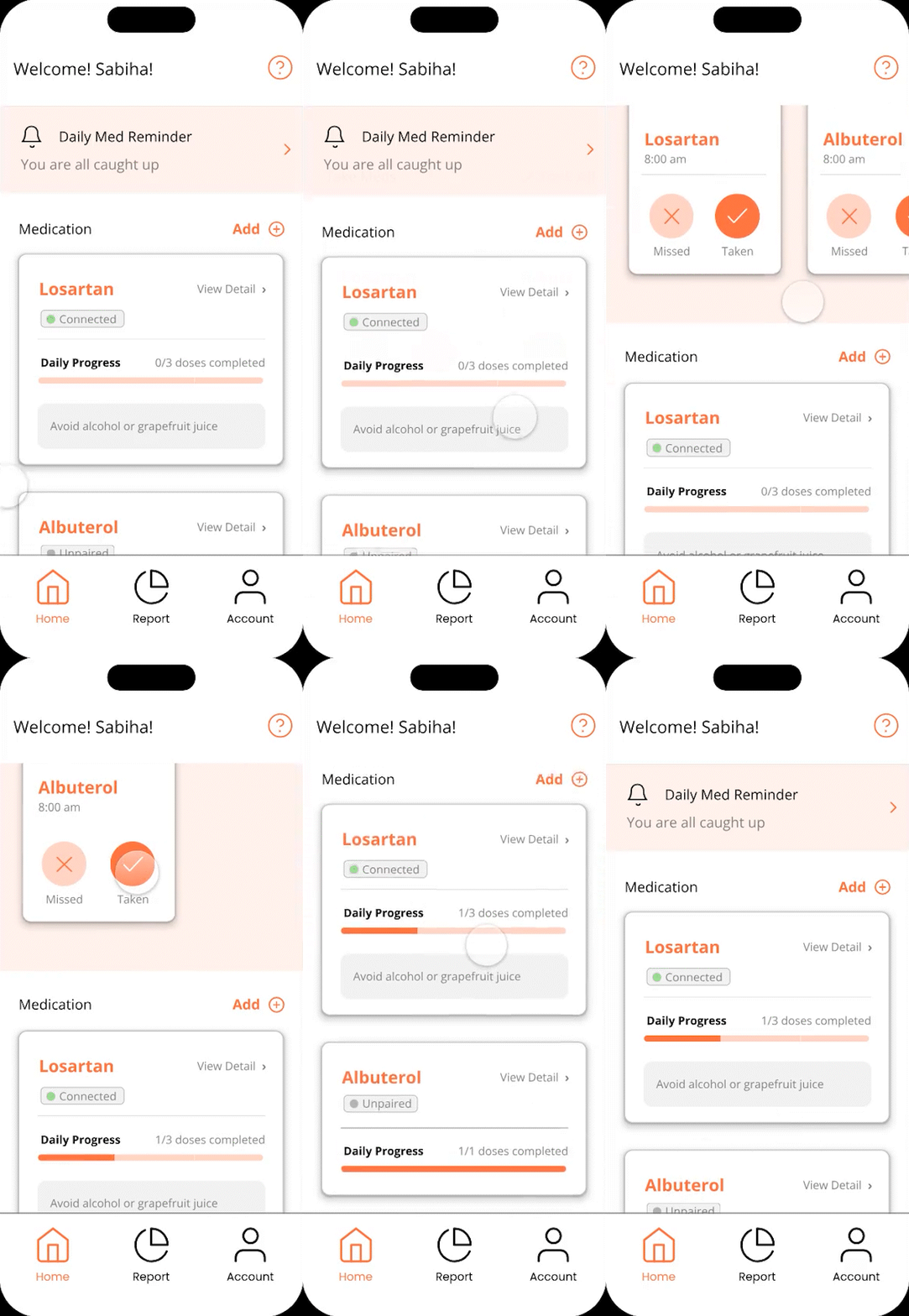
Provides a clear daily progress of upcoming and completed doses.
-
Although the sticker triggers reminders, the app serves as a synchronized backup system for reliability.

Solution 3: Color-coded Visual Record
-
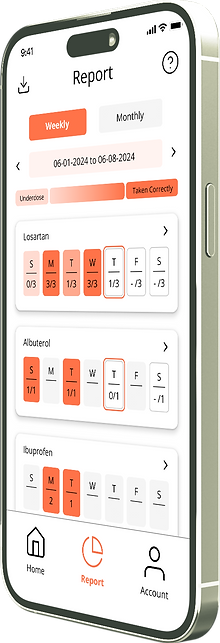
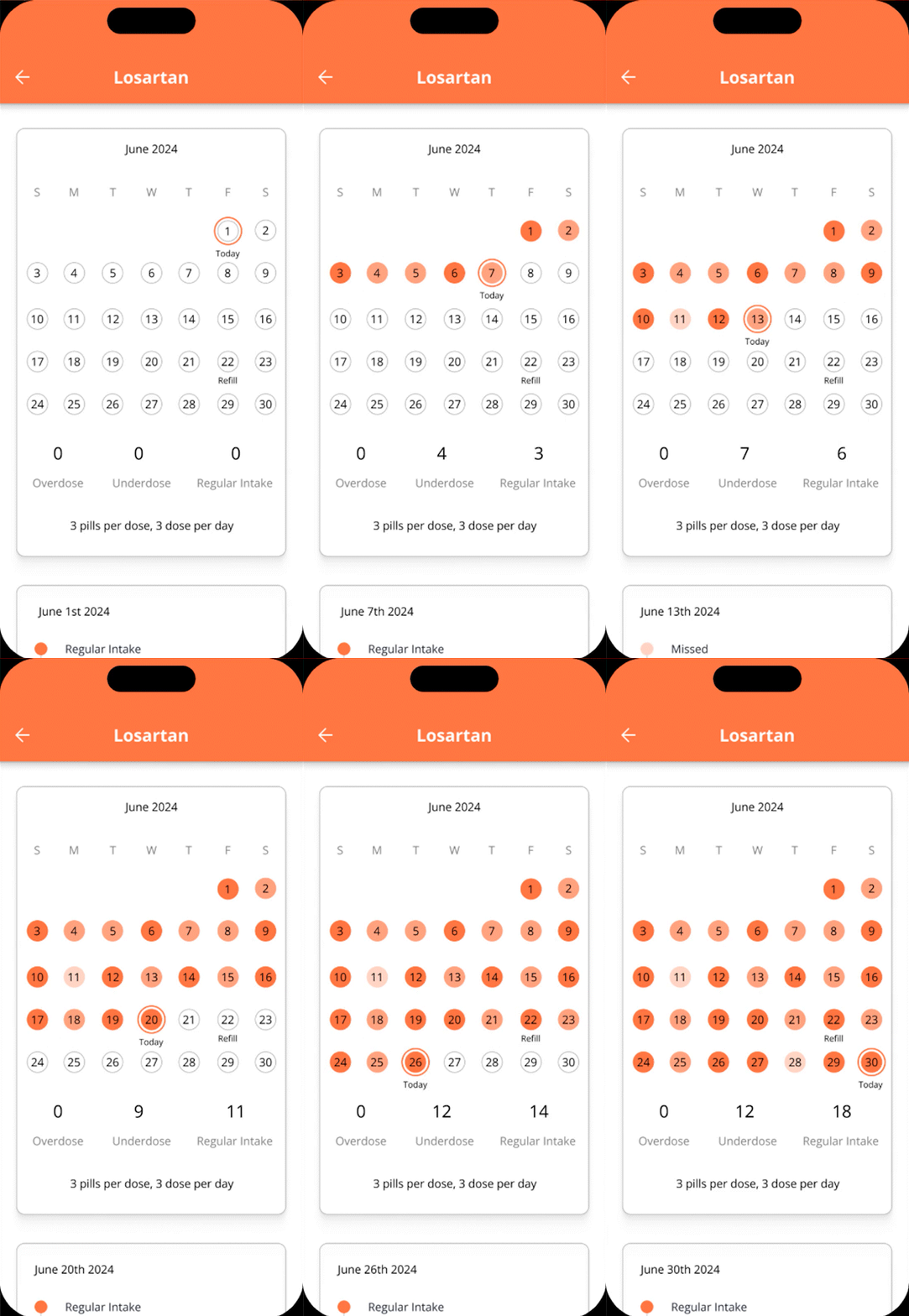
Introduces the color-coded visual record to show adherence patterns.
-
Helps both older adults and caregivers quickly identify behavior trends over time and communicate with the clinician about their adherence data.





Progress
How we get there

Brainstorming

User Journey
Ideally, here's how the experience is designed to flow:

Usability Test
To test whether our proposed solution works and whether the user flow is feasible, we conducted user testing with surveys and interviews focusing on the following three hypothesis:
.png)
User Test
First, we aimed to get an overall picture of the current version.

Older adults felt satisfied and liked the layout and visual style, but they also highlighted the need for simpler language, more explicit guidance, and stronger visual emphasis on key actions to make the app fully intuitive for first-time users
Hypothesis 1
First, we aimed to get an overall picture of the current version.
Hypothesis: A daily progress bar helps users anticipate and plan their medication schedule, motivating them to stay consistent.
Result: Participants showed 20% higher confidence compared to the version without daily progress.
Finding: Compared to the version without a separate daily progress view, older adults felt more assured and aware of what was coming next.

Incorporate notificationi with daily progress and emphasized progress visualization
Iteration

Hypothesis 2
Hypothesis: The color-coded visual record helps users recognize patterns in their medication intake and communicate more effectively with their clinician.
Result: Older adults shows understood intake information and behavior patterns 30% faster compared to the bar graph version.
Finding: Participants found the color-coded visualization clearer than bar graphs but still needed time to interpret it correctly.

Improved accessibility by adding legends and numeric indicators so that the information did not rely solely on color.
Iteration

Hypothesis 3
Hypothesis 3: A one-tap interaction lowers cognitive load and increases the likelihood of consistent use by making the intake recording process simple, effortless, and error-free for older adults.
Result: 80% of older adults preferred this type of interaction to other methods currently on the market and praised its simplicity.
Finding 3: Older adults liked and preferred the physical smart sticker and its simplicity. However, the setup process remained challenging for some caregivers and older adults.
Refined and make the setup process more tailored for older adults.
Iteration


08
Future Directions
Onboarding Guidance
Develop an interactive onboarding session that walks users through adding medications, connecting smart stickers, and recording intake status to ensure a smoother first-time setup experience.
Enhanced Reports
Refine the reporting system with clearer, more distinct color coding to help users easily distinguish between different medication types and intake patterns.
Caregiver & Clinician Authorization
Establish a secure authorization system that clearly communicates data privacy while allowing users to share adherence reports with approved caregivers and clinicians for timely updates and coordinated care.